You can go to a winery in Sicily, Italy and enjoy yourself… and the bread.
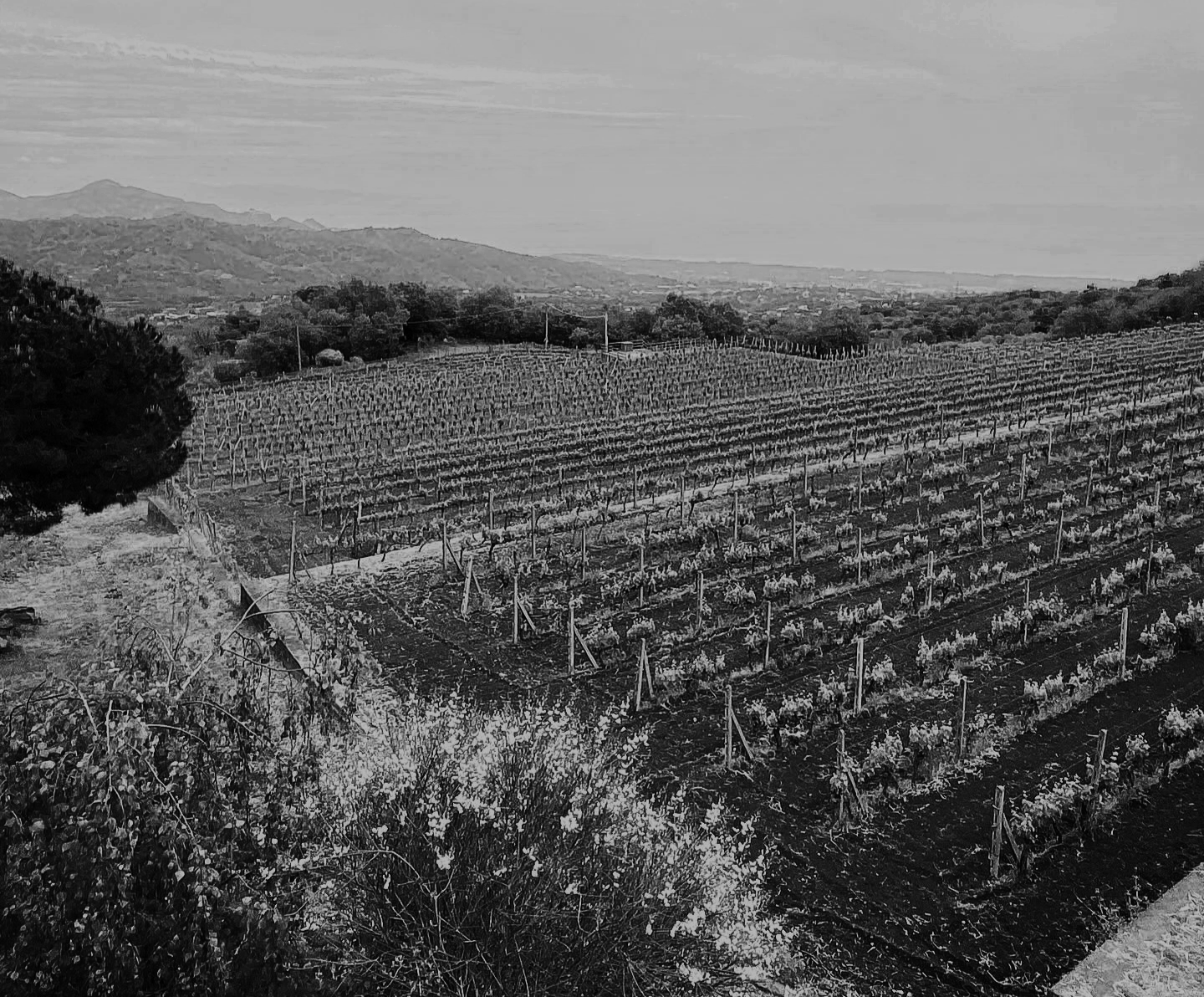
Gambino Vini | Sicily, Italy
“All that nature has of great, all it has of pleasant, all it has of terrible, can be compared to Etna and Etna cannot be compared to anything.”
- Dominique Vivant Denon
Going to a winery in Italy is a classic bucket list item, right? Even if you’re not a wine lover. Italy is known for their rich traditions, flavorful cuisine, art, history, fashion, and of course, their distinctly unique wine.
Visiting a winery in Italy is an in-depth, once-in-a-lifetime experience. Where vineyards have been in families for generations and the winemakers are cultural custodians, having an authentic winery experience in Italy is a must-do.
Getting to travel to Italy was a dream for me… I envisioned myself spending my days enjoying carbs, sipping coffee at an outdoor cafe, touring museums, delving into the culture, shopping, and savoring every gelato flavor available. I pictured sitting in a bottega with a perfectly plated pasta dish with fresh bread and olive oil, and a glass of a local red wine.
Unfortunately, that was not the Italian experience I got to have.
Learning to experience pleasure without alcohol was a hard lesson to learn for me. I’ve heard from many people in recovery that they were ashamed of their alcohol use. That they knew it was bigger than anything they could control and deep down, knew they needed to quit.
That wasn’t the case for me. I didn’t think I had a problem. I didn’t think I needed to quit drinking. Ignoring the “talks” my family had with me about my drinking, I was surrounded by people who drank a lot. I could rationalize that everyone I knew drank as much as me.
What they weren’t doing was drinking when no one else was around, or to simply get through the day. They weren’t using alcohol as a way to escape and to cope with things in their lives they didn’t want to face. It’s taken me a long time to realize this… alcohol, for me, was a crutch.
I wasn’t drinking because it was social, I drank to become a different version of myself. Someone I thought was fun and uninhibited. It made me feel free and alive. Stubbornly, or stupidly, I stood strong in my view that I was using alcohol the same way as everyone else.
I couldn’t go anywhere without having a drink. If I knew I was heading somewhere that alcohol would not be present, I’d bring my own (what else are those airplane bottles for?!). I became known as the person who always had a bag full of liquor options to liven even the dullest event. And even if no one else partook in my indulgence, I didn’t think it odd.
We used to frequent a breakfast place known for its delicious food and dive atmosphere. It was a Sunday tradition for a while. I’d wake up hungover and pull a cap over my disheveled hair to meet some friends for breakfast. We battled crowds and long wait times just to enjoy the legendary food.
Not believing that there was a restaurant that didn’t serve alcohol, I was dumbfounded the first time we went and I couldn’t order a Bloody Mary. What other reason is there to go to breakfast without a morning buzz? After our first visit, I realized I needed to bring my own alcohol. Whiskey in my coffee became my regular.
Looking back, I know it was embarrassing (and probably illegal) when I’d shamelessly pull out my mini bottles at this small, family-style restaurant. Obviously, others could see what I couldn’t.
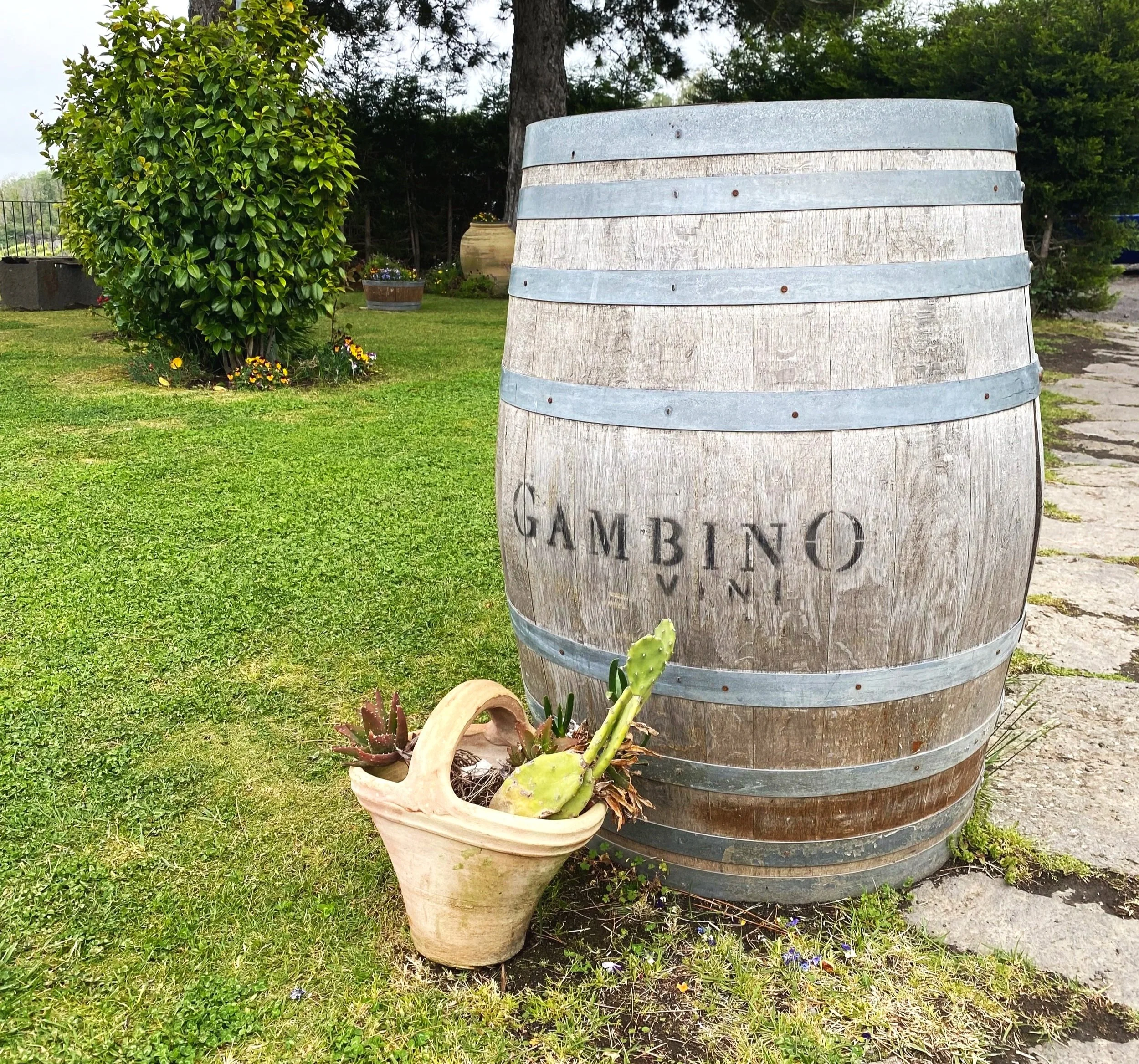
Obviously, others could see what I couldn’t.
When my sister, mom and I began planning a trip to Italy, I knew going to a winery would be on the list of things to do. Our initial conversations about the vacation began while I was still drinking. My Italian dream was going to come true! Well, not quite. The universe (or maybe the natural law, karma) had other plans. By the time I began working up our daily itineraries, I was sober.
Still, I apprehensively selected a winery for us to visit in Sicily so my sister - who has a deep appreciation for wine - could experience it. Surprisingly, I wasn’t afraid that going to a winery would be a temptation (I was almost a year sober and strong in my dedication to recovery).
Instead I believed the visit would be painfully boring for me. My old dream was shattered so I began to envision what a day at an Italian winery, not drinking, would look like. It did not sound like fun… at all.
As we drove towards the winery, the road winding its way up Mount Etna through a surreal mix of volcanic rock, lush vineyards, chestnut and pine forests, I started to change my initial fear that the day would be something I just needed to get through.
The landscape transported me and I centered myself in the moment. When our driver dropped us off, the first thing I noticed was the incredible views and the fresh mountain air I was breathing.
With Mount Etna as the backdrop, the winery itself stood unassuming among the vineyards. A low, sun-washed building with terracotta roof tiles, warm stucco walls, and dark volcanic stone was woven into the landscape. Its architecture was simple and distinctly Mediterranean, almost humble against the enormity of Etna surrounding it.
It felt less like a grand estate and more like a place that belonged exactly where it was… built into a landscape shaped by fire and time.
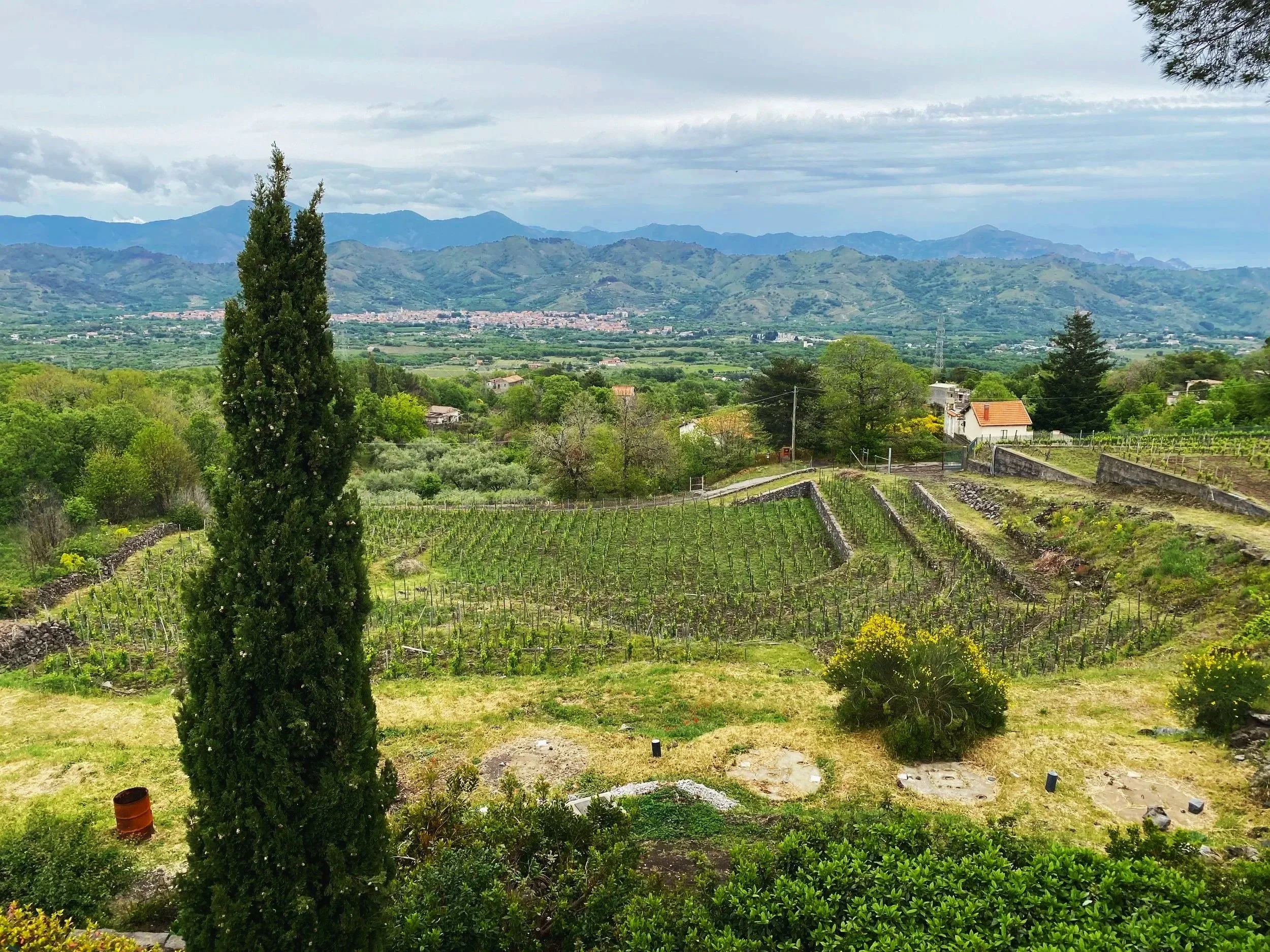
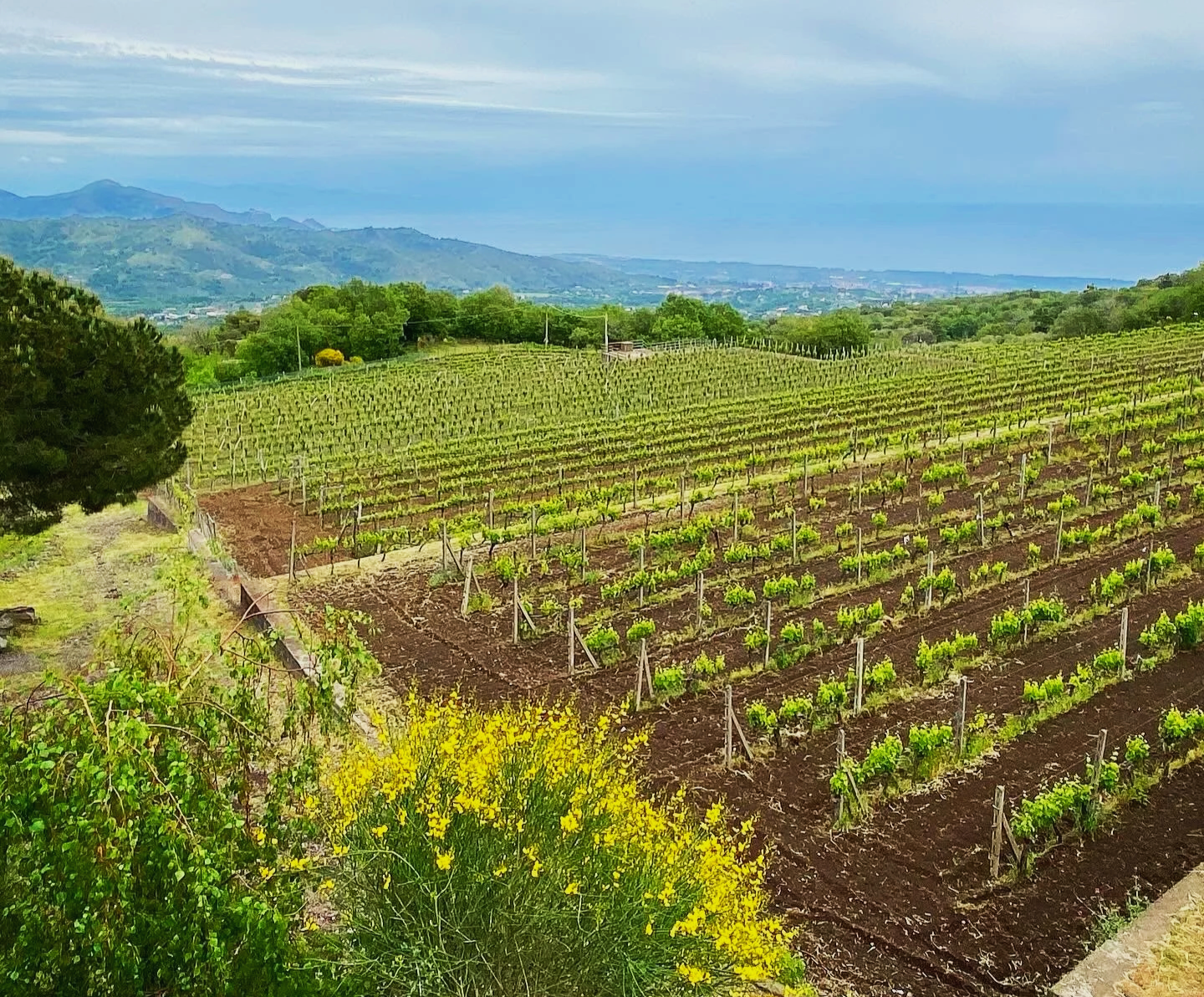
From the harsh volcanic soil, such unlikely vines could produce something so exquisite.
The grapevines weren’t thriving despite the harshness of where they came from; they were thriving because they learned how to.
We were greeted by friendly hosts who explained how their wine is made. Beneath the vines is soil born from fire. Layers of ancient lava and volcanic ash have slowly transformed into some of the most fertile ground on Etna. At the higher elevation, warm Sicilian days and cool mountain nights allow the grapes to develop slowly, holding onto the acidity and aromas which make Etna wines so distinctive.
They described that their wine is like tasting the landscape itself: the heat, the altitude, the volcanic earth and centuries of Sicilian tradition.
As I listened to them detail the reason for each unique flavor, I was entranced by how beautiful and seemingly implausible it could be that even from the harsh volcanic soil, such unlikely vines could produce something so exquisite.
And that felt strangely familiar.
The grapevines weren’t thriving despite the harshness of where they came from; they were thriving because they learned how to.
And maybe that’s what I loved most about that day: I didn’t need the wine to experience the richness of it. The mountain, the food, the stories, the people, the view—all of it was enough. I could be fully present for the experience and still savor every bit of it.
That, and the bread they served!
Written by: Parwick
Photo credit: Parwick, 2024